
After you email a professor, keep these four lines
2026-09-28
Ten days later, the inbox still will not say which professors wrote back. Keep the name, the send date, what you asked, and the department deadline somewhere you will actually open again.
Ten days after a week of emails, the inbox still will not say which ones came back. Search turns up a draft, a fellowship you already dropped, and a thread with your own supervisor from last term. The letters are sitting there. Who answered is something you have to pull out of them by hand.
What to write down
Four lines per person is enough. Past that, it becomes a notebook you never open again.
- The name and the university, written the way the department page writes them. Smith in biology and Smith in biomedical engineering, two buildings over, are different people.
- The day the message actually went out, not the day you meant to send it.
- One line on what you asked: a PhD place, a visiting term, or a question about a paper. When the reply is two lines long, this is what tells you what you asked.
- Whether a reply arrived, and the date of the last nudge.
A spreadsheet can hold those four lines. It tends to stop getting updated the week the deadlines pile up, because the file is the fifth tab and the mail is the first one. Keep the four lines somewhere you already open when you want to know who is still waiting.

Two weeks of silence is ordinary
A lot of faculty read student mail in a batch, often after a grant deadline of their own. Three days with no answer usually means they have not opened it. Three weeks, and no out-of-office either, is a reason to write once more: shorter than the first note, the date of that note in the first sentence, and one question. A third message rarely helps. It reads as pressure, and the department has already seen your name twice.
If the reply is a polite refusal, mark it and stop. Opening that same thread in January with the same paragraph takes a slot you could spend on someone who has not answered.
The department deadline lives on another row
The professor is one row. The program is another. Someone can encourage you on a Tuesday, and the application portal can still close on Friday. The date on that department's own page is the one that counts, in the time zone they wrote. A call that says 15 December, 11:59 pm Eastern, is a different evening in Tehran.
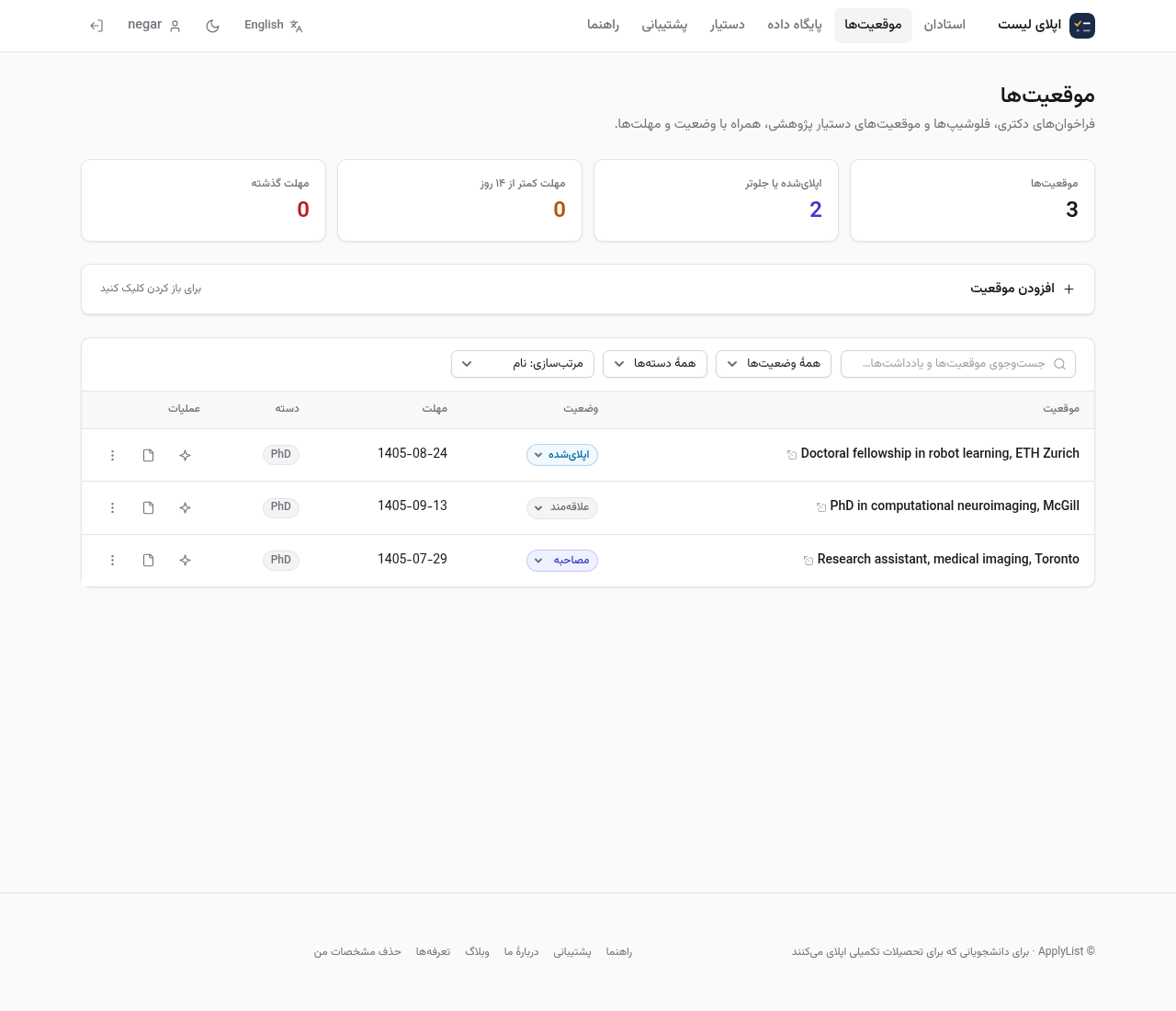
Keep the position, its status, and that deadline next to the people you wrote to. A yes from a professor can hide a portal you have not opened yet.
The first email can leave a few things out
A five-page account of every course you have taken does not help the reader. They want a fit with work they already do, and a sign you read one paper of theirs. Take out any sentence you could send, unchanged, to the next person. The lab, the paper, and the question should be the parts that will not survive a copy.
If you do not have a number yet, leave the space blank. An invented GPA, or a paper that is still an idea, becomes a problem the day someone replies and asks to see it.
A list you will open again
On ApplyList, the professors list is those four lines: name, university, topic, and whether the email went out. The date is stored when you mark it sent. About two weeks later the home page shows who still needs a follow-up. Positions stay on their own list, with the deadline. Tracking your own contacts and positions stays free.
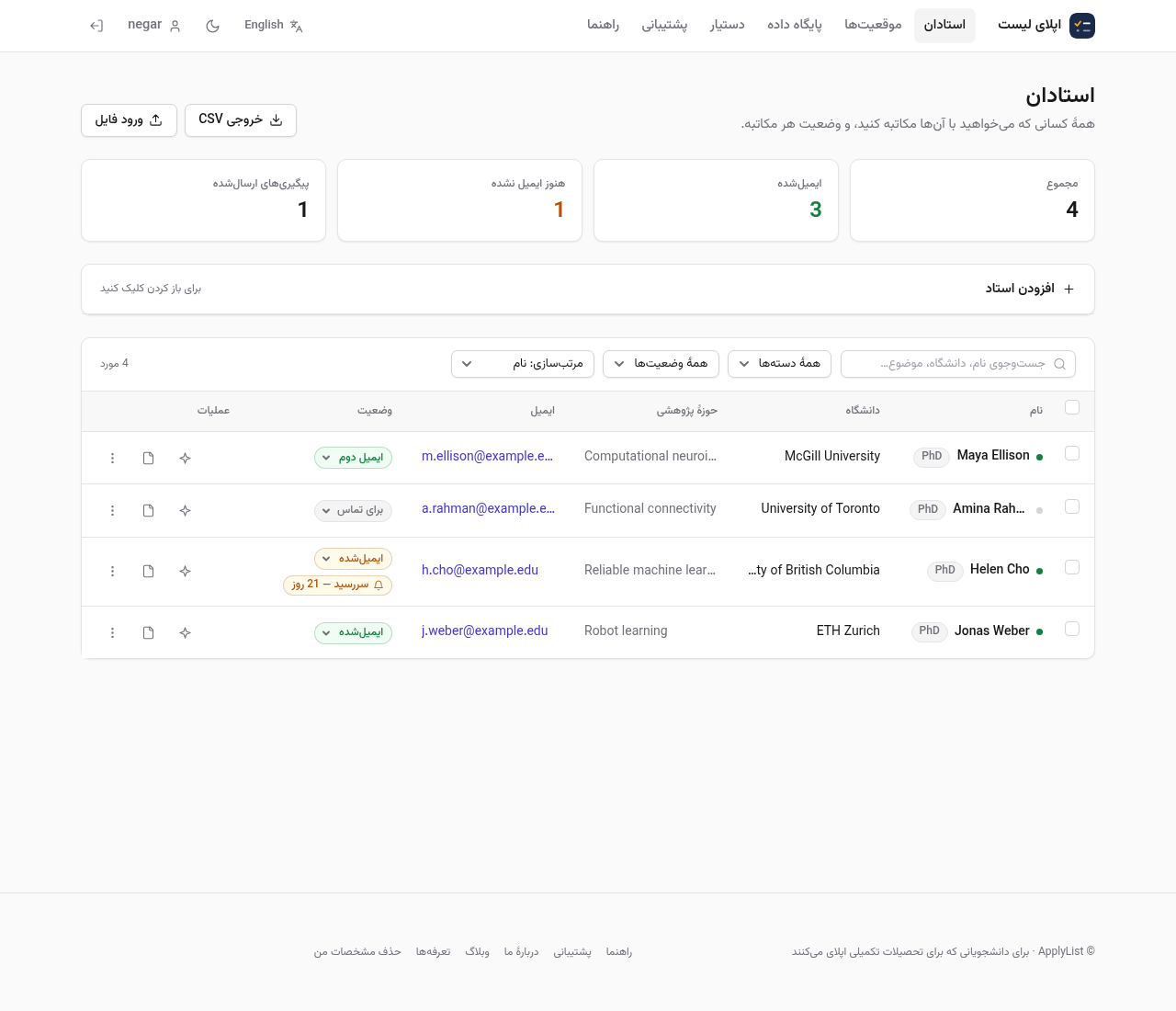
The names in that picture are examples.
Comments
No comments yet.
Sign in to leave a comment.