
How to write a statement of purpose for graduate applications
2026-10-06
A statement of purpose is one letter for one program: why this group, what you have already done that fits, and what you are asking for. Paste the same paragraph to every university and the committee can tell.
Students searching for “how to write a statement of purpose” or “SOP for master’s / PhD” usually already have grades and a language score. What they lack is a page that fits this department. The statement of purpose — the SOP — is that page. It is not a life story, and it is not a résumé in paragraph form. It is a short argument: why this program, what you have already done that belongs next to their work, and what you are applying for.
Read the program page first. If it asks for a personal statement, a motivation letter, or a research statement instead of an SOP, follow that label. The names overlap; the instructions on the university’s own form do not.

What the committee is reading for
Admissions readers skim for three answers. If any one is missing, the rest of the polish does not save the file.
- Fit. Why this department — a lab, a course sequence, a professor’s recent paper — and not a famous name three buildings over.
- Evidence. A project, thesis, paper, internship, or course where you actually did the work you claim. Titles without dates or tools read as filler.
- Ask. Master’s coursework, a PhD place, or a research stay. Mixing all three in one closing paragraph muddies the file.
A sentence that could be emailed unchanged to the next university is not ready. Rewrite the fit paragraph until it would sound wrong sent elsewhere.
Master’s SOP and PhD SOP are different shapes
A master’s statement often leans on courses, skills, and why this curriculum. A PhD statement turns on a research question you can discuss, and whether someone in the group is taking students. People call both an “SOP.” Pasting a course-heavy master’s draft into a research PhD portal is a common way to waste a fee.
For a PhD, find the supervisor and read one paper before the statement exists. Name that paper in your words. A slogan about “cutting-edge AI” or “solving climate change” without a paper behind it does not count as fit.
A workable order on the page
Programs set length — often one to two pages, sometimes a hard word count. Inside that limit, this order usually holds:
- Where you are now. Degree, field, and one concrete line of work (thesis title, methods, or a project outcome). Skip childhood hobbies.
- What prepared you. Two or three experiences with tools, data, or results — not a full CV. The CV already lists the rest.
- Why this program. One group, one theme, or one professor’s line of work, taken from their page or a real paper. For PhD applications this is the center of the letter.
- What you want next. The degree, the start term if the form asks, and a plausible aim after it. Keep it short; do not invent a career you cannot defend in an interview.
- Close once. Thank them and stop. A second emotional finale weakens the first.

What to leave out
- A biography that starts in primary school.
- Praise for the university’s “prestigious ranking” with no program detail.
- Grades or scores already on the form, unless you are explaining one gap the page invites you to address.
- Work you did not do. A polished false claim becomes the problem the day someone replies and asks for the paper.
- The same letter sent to ten portals the same afternoon. Committees read across fields; identical openings are easy to spot.
If a fact is still missing — a GPA scale, a paper under review — leave a clear gap in your draft rather than inventing the number. The same rule the assistant uses when it drafts applies here: brackets beat fiction.
Keep the SOP next to the real deadline
The statement is one file. The portal deadline is another. A strong SOP does not move a Friday close. Save the program name, the degree, and the deadline the way the department page writes them — in their time zone — beside the people you emailed.
On ApplyList, positions hold status and deadline; professors hold who you wrote and when. Tracking your own contacts and positions stays free. After a supervisor email goes out, keep the four lines you will need later.
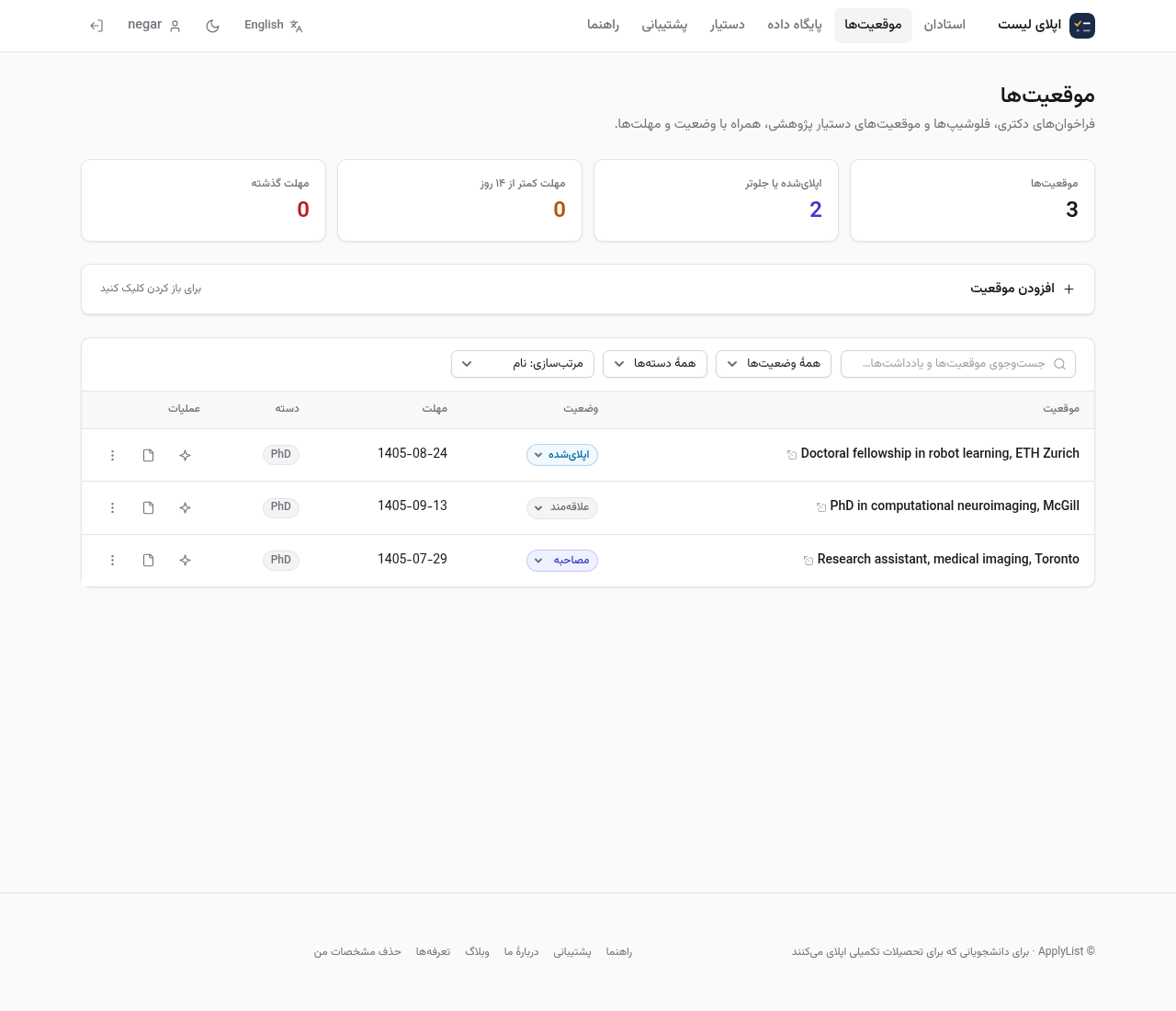
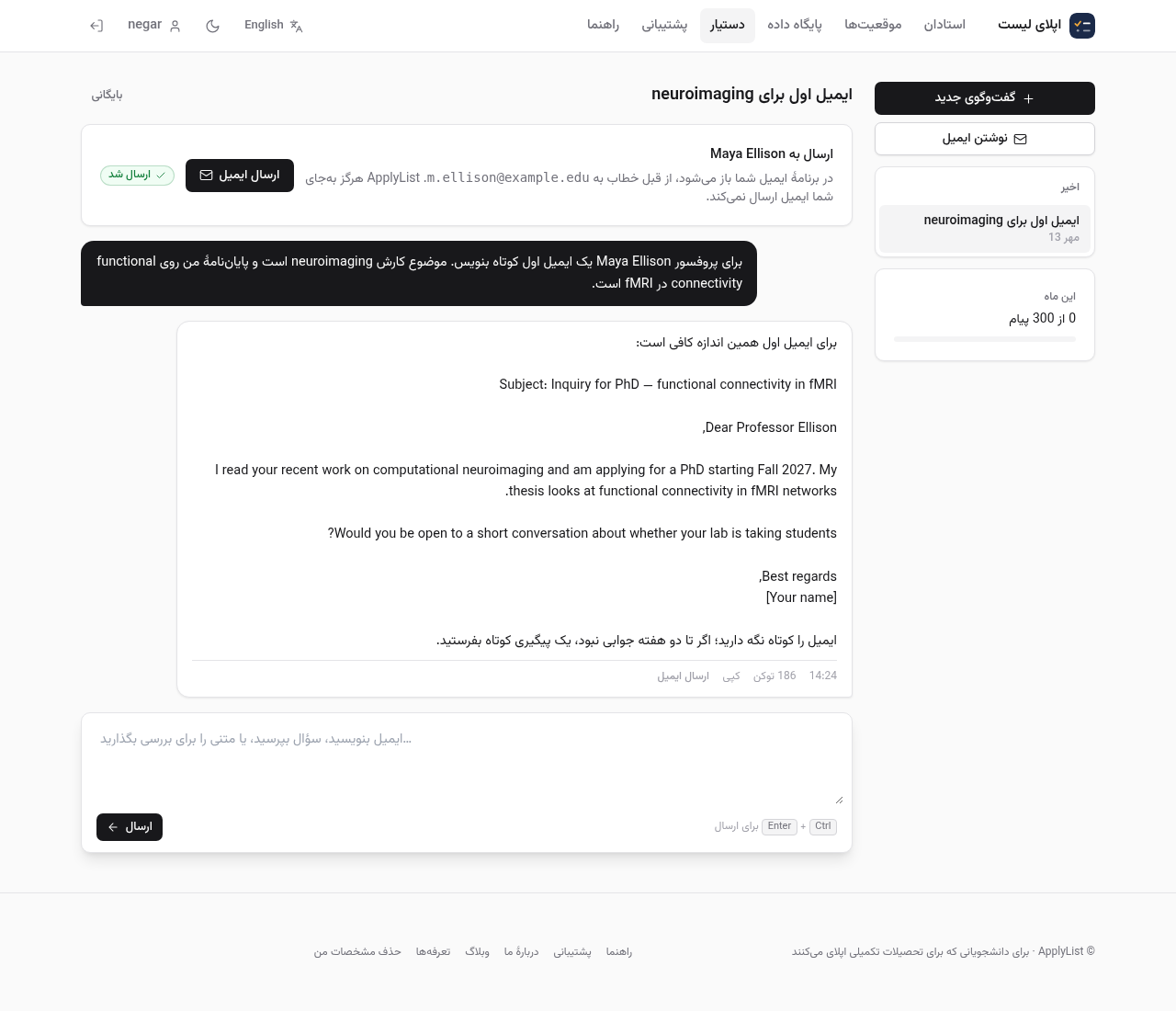
When the list of programs is real, draft the SOP against one row at a time — or open the assistant for a first pass you still have to edit. For the order of the whole application, read what applying is.
Comments
No comments yet.
Sign in to leave a comment.